


Nicholas LaMaina Redefines Contemporary Dance Through Fearless Creativity And Boundless Collaboration
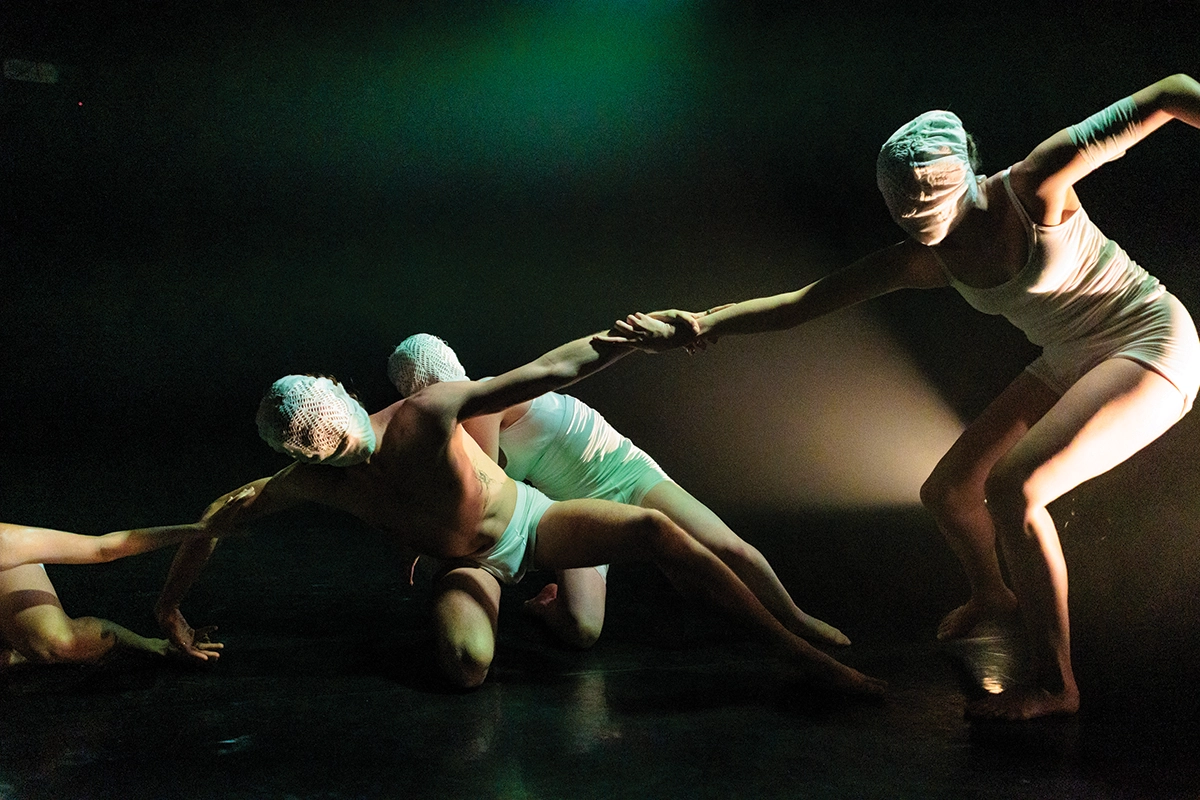
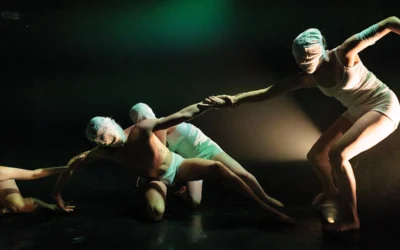
Photo: Nicholas LaMaina brings fearless imagination to contemporary dance, combining movement, storytelling, and collaboration to redefine artistic expression for a new generation. Photo by Ric Cederholm)
The Future Of Dance Belongs To Those Who Dare To Create Without Permission
Nicholas LaMaina discusses artistic evolution, choreography, collaboration, teaching, and founding eni artist collective while advocating fearless creativity, accessibility, and contemporary dance that embraces imperfection, humanity, and innovation.
N icholas LaMaina represents a new generation of artists who refuse to be confined by a single discipline. As a dancer, choreographer, teacher, model, and founder of the eni artist collective, he approaches movement as both an artistic language and a catalyst for conversation. His work is driven by curiosity, fearless experimentation, and a deep desire to challenge convention while remaining profoundly human. Rather than pursuing perfection, LaMaina embraces vulnerability, imagination, and the beautiful imperfections that make art resonate across cultures and communities.
Nicholas LaMaina is an inspiring visionary whose originality, courage, versatility, and generosity continue shaping contemporary dance with extraordinary imagination and purpose.
Educated at The Juilliard School and shaped by collaborations with some of the most influential voices in contemporary dance, Nicholas has developed an artistic identity that extends far beyond technical excellence. Whether performing on international stages, collaborating with leading fashion houses and global brands, or creating original choreographic works, he consistently transforms movement into immersive worlds where storytelling, emotion, and visual architecture coexist. His ability to move effortlessly between concert dance, commercial performance, film, education, and interdisciplinary collaboration reflects an artist whose creative vision is as versatile as it is distinctive.
What makes Nicholas especially compelling is his unwavering commitment to accessibility. Through the eni artist collective, he is helping redefine contemporary dance as a collaborative space where movement intersects with architecture, design, music, technology, and community. His belief that dance should be alive, imperfect, and open to everyone offers a refreshing counterpoint to the exclusivity that has too often surrounded the art form. In an era increasingly shaped by artificial intelligence and digital precision, his celebration of authentic human expression feels both timely and essential.
Throughout this conversation, Nicholas speaks with remarkable honesty about artistic growth, resilience, and the courage required to build a creative life on one’s own terms. He reflects on the challenges that shaped him, the mentors who inspired him, and the philosophy that continues to guide his work: create fearlessly, embrace transformation, and never wait for permission to pursue your vision. His insights reveal an artist who understands that true innovation is born not from certainty, but from curiosity and the willingness to continually evolve.
WOWwART Magazine is honored to feature Nicholas LaMaina—an exceptional artist whose imagination, integrity, and multidisciplinary vision are helping shape the future of contemporary performance. His work reminds us that art is not merely something to witness, but something that invites us to question, to connect, and ultimately to see the world through an entirely new lens.
Your journey has taken you from Juilliard to performing, teaching, choreographing, and modeling—what has been the most transformative experience in shaping your artistic identity?
The journey of my artistic career has taught me many lessons in confidence, perseverance, and creative thinking. Navigating the transition into Juilliard from competitive dance in South Florida was a tremendous challenge – I felt I had way less knowledge of the field than my peers, less bodily knowledge, less of everything… but my strength was always my ideas and my ability to turn ideas into tangible things, whether that was in the form of my own choreography or as a dancer in process. I believe dancing and learning alongside my peers from Juilliard revealed to me who I was over time. Not the technician nor the easily digestible talent but an artist interested in pushing boundaries (my own and of the field). This has translated into my professional life as well, leading me between freelance gig work of all kinds. I’ve learned to be my own business and also created a non-profit to create my own opportunities and share my ideas freely. Creating eni artist collective is easily the hardest thing I’ve done because so much of it was unknown – I have only a dance degree after all and no prior experience in the business of non-profits. All of this to say, I am constantly learning and it is constantly transforming the way I think and move as an artist. I have surrendered to the inevitable and constant transformation which is simultaneously scary and freeing.
You’ve worked with many acclaimed choreographers and movement artists. What is the most valuable lesson you’ve learned from collaborating with such diverse creative voices?
I have a lot of gratitude for the artists I have worked with and who have been a part of my journey. One being Jermaine Spivey with whom I worked with at the NDT Summer Intensive in 2024. In the process, Jermaine spoke to the group that the knowledge of dance was already inside of us and all we had to do was “just do it.” It sounds simple, and it is really that simple. Just do the three pirouettes. Just create the company you dreamed of creating. It translates into so many aspects of life and a large meaning I took from him is to just let my guard down and be confident. I feel I perform my best when it feels natural and easy and I have already done so many hard things. I often tell myself in a sort of delusion… well I made it through Juilliard, so this should be fine. I think the sense of delusion is good though because a lot of it is based in reality and it allows me to stop thinking and just do it.
How has living and creating in New York City influenced your approach to movement, performance, and storytelling?
New York has given me exposure to so many different types of dance and artists of all regards. I draw much of my personal inspiration from outside of dance and I feel that is somewhat a manifestation of where I come from but also how that has followed me. I grew up in performing arts schools my whole life – since I was 12 years old. I made some of my greatest friends in my childhood years in South Florida and some also moved to New York for school when I did and studied things outside of dance. My close friend and longtime roommate, Morgan Jourdin, now at Yale getting a masters in architecture, really shaped my views on aesthetics. I see dance largely as a visual architecture as I choreograph. I feel the thing I do is create worlds, much like an architect but for the stage. I believe this allows dancers to live freely and actively inside the confines of work just as humans interact with the cities we inhabit and the world we encounter shapes how we move.
Your choreography often creates distorted realities and critiques societal norms. What themes or questions are currently inspiring your creative work?
I’ve always been very interested in sci-fi films. The way that they draw you in and transport you into a body that is not your own and trick your brain into forgetting what’s real. This interest is really apparent in my work as I tend to shape worlds that feel slightly off from the one we currently live in. Through maximalist metaphor or minimalist imagery, I love work that has purpose as well. I very, very rarely create dance for dance’s sake. I often start with an image, a word, a scenario that then expands into a storyline (much like a film). I’m really interested in the ego right now and also the collective consciousness.
As the Founder and Artistic Director of eni artist collective, what vision do you hope the company will bring to the contemporary dance landscape?
I founded eni artist collective alongside my creative partner Ekko Greenbaum with dreams of it being a creative home for movement artists who identify a bit further than just dancers. With a focus on movement, community, and collaboration I hope that eni continues to push the idea that dance is meant to collide with its sister arts. I hope this collaborative spirit reintegrates dance with society and creates performance spaces for the many.
I’m so tired of the elitist bubbles of the dance world that rely solely on dance’s physicality and the image of technique and organization to the point where creativity and risk is snuffed out. I would love to start to see a shift from dance as something of perfection to dance as something that is alive in its imperfection. Especially with AI and the uncanny digital world we are so quickly being engulfed by, humanity (dance) in its imperfection is so important.
Accessibility is a core value of eni. What does making contemporary art more accessible look like in practice?
At eni, Ekko and I lead with transparency. It starts there. We want the whole company of artists to feel they are a part of a community that cares about sharing their work. We started eni to uplift all of these wonderful people after all. From there, we have a large emphasis on collaboration with other art forms besides just dance. This allows us to position ourselves uniquely and not just be a dance collective but an artist collective. This then opens up our reach and our audience to art lovers of all kinds and then we get to expose all different kinds of people to different types of art. Alongside this, we offer pay what you wish options for our performances, scholarships to our educational opportunities, and are constantly ideating new community events and opportunities for artists.
You move between concert dance, commercial projects, nightlife performances, and film collaborations. How do you adapt your artistry across such different environments?
I would say that the core of my artistry is openness and versatility. I grew up dancing at my mother’s dance studio, That’s Dancing, in Lake Worth Florida, a competitive dance studio and was constantly switching between styles of dance. Tap, Jazz, Hip-hop, Latin, Ballet;you name it.
In any opportunity I have to dance and share a part of who I am, I just try to be myself and offer myself to the fullest extent to the experience.
As both a performer and choreographer, how do those two roles inform and challenge one another in your creative process?
It is such a special experience to perform professionally at the same time that I am creating my own work as a choreographer. We are so directly influenced by what we know. Whenever I get to work on a project as a dancer that inspires me, it gives me tools and opens my mind to possibilities for my own work. Even dance experiences I don’t enjoy have opened pathways for my own work.
I feel it is sometimes frowned upon to say your work is “inspired,” because everyone wants to be unique and different, but I think its so important to acknowledge we are all just a product of the environment we experience. My work is my work because of the work I have done and seen, the opinions I have formed, and the ideas I identify with.
I think it would be interesting to see how my work would evolve once I stop performing myself. Would it dive into the niche of where I had stopped performing? Would it transcend and go further? Would it devolve back to the basics? Who knows – one day maybe I will.
You work closely with students as a mentor and teacher. What do you find most rewarding about helping the next generation of artists develop their voices?
My mother is a dance educator of 29 years; she started her own dance studio when she was just 24 years old. Continuing that legacy is something that feels extremely rewarding to me. Getting to share knowledge from my experiences as a dancer and artist with the next generation is so inspiring to me. It feels like without the ability to pass on information, the work I’m doing would be stagnant and meaningless. Whether performing, teaching, or choreographing I need to expel my ideas and my art into the world. I want my art to be seen and shared and so naturally, I teach… It’s the most selfless facet of creative output in my opinion and it still teaches me and inspires me! Not only do I share my knowledge and ideas (hopefully) inspiring the next generation, the students also reveal things I would never know without having been in the room as an educator.
What advice would you give to emerging artists and choreographers who are trying to build a sustainable creative career while staying true to their artistic vision?
If your work isn’t being supported, find a way to support yourself. Don’t stop creating even when it feels like there’s nothing (because there will be nothing a lot of the time). The only way to exist as yourself in a world you haven’t yet existed is by just existing! The art world needs you in order to evolve as much as you need it – keep creating, don’t wait around for opportunity.
Funny Questions:
If your movement style were a food, what would it be and why?
Tacos. Explosive, Textured, Messy, Always great on a Tuesday.
What’s the most unexpected place where you’ve found inspiration for a dance piece?
Bushwick.
What’s a dance-related skill everyone assumes you have mastered, but still keeps challenging you?
Straightening my knees. (I’m slightly bow legged and have absolutely zero hyper extension).