




Anne Bengard Inspires Through Colorful Narratives and Provocative Themes
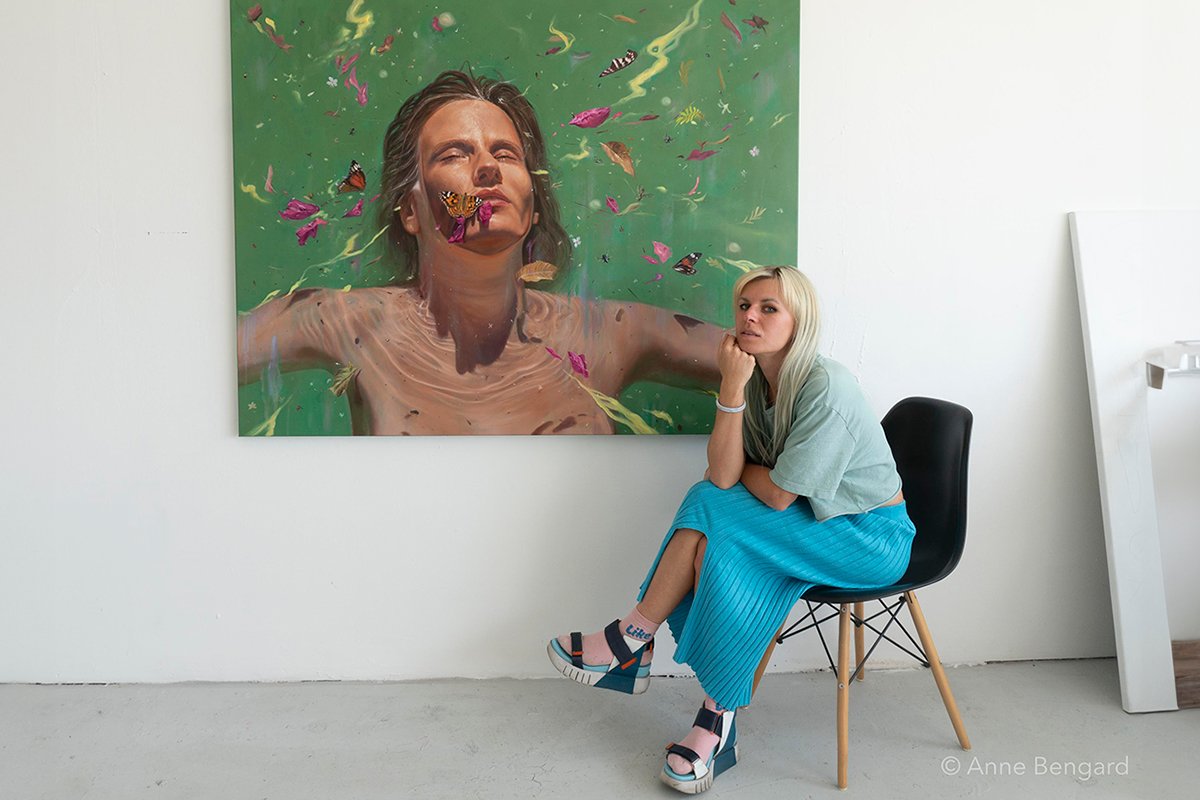
Anne Bengard showcases her unique artistic vision in “Dirty Pool,” a vibrant piece that blends color and emotion, inviting viewers to reflect on deeper themes of identity and experience.
Exploring Personal Journeys and Societal Reflections Through Powerful Art
Anne Bengard shares her artistic journey, creative process, and inspirations while exploring themes of consent, identity, and human experience through her vibrant paintings and murals.
A nne Bengard’s artistic journey is as vibrant and multifaceted as the works she creates. Born in Leipzig and nurtured by the bustling streets of Berlin, Anne’s evolution as an artist reflects a deep engagement with diverse cultures and experiences. Her early encounters with performance design and the eclectic world of fetish clubs shaped her ethos of consent, respect, and exploration, themes that are undoubtedly threaded throughout her creative output.
Anne’s transition from the vibrant nightlife of London to the tranquil shores of South Devon, and her subsequent adventures as a mermaid in Thailand, reveal a quest for authenticity and self-expression. This quest led her to embrace mural painting and large-scale watercolor works that encapsulate her unique vision. Her art, characterized by optimistic pastel hues and provocative themes, invites viewers into a world where personal narrative and broader human experiences intertwine seamlessly.
As we delve into this interview, we are privileged to glimpse the heart and mind of an artist who challenges societal stereotypes while embracing the nuances of human emotion. Anne’s work demands our attention, inspiring us to reflect on our own experiences and perceptions of the world. Through her lens, we are encouraged to slow down, observe, and appreciate the intricate beauty in both the ordinary and the extraordinary. Join us as we explore Anne Bengard’s artistic journey and the compelling stories that drive her creative spirit.
Anne Bengard masterfully blends personal narrative with societal reflections, creating art that is both provocative and thought-provoking.
Can you share with us the journey that led you to art? Was there a defining moment when you realized painting was your passion?
I do remember two distinct moments when I was still living in London. When I was studying performance design at uni I would try and finish my course work as quickly as possible (though not to the highest standard I was capable of but just enough to pass) so I had more time for painting. After graduating I started freelancing for a small events company as a venue stylist. I was offered to take on more responsibility and lead on creative tasks; a great opportunity to level up in my career. But my gut feeling didn’t mirror this. I felt like this would infringe on my time for painting.
“I think in concepts and feelings which I then try to translate into visuals.” – Anne
Could you describe your creative process? How do your works evolve from initial concept to the finished piece?
I have a hard time imagining things visually, which surprises a lot of people. I think in concepts and feelings which I then try to translate into visuals. I jot down ideas as rough sketches and writing or create mood boards to communicate those ideas. My preparation for a painting usually involves photoshoots with my muses, sketches and digital collages.
I’ll usually paint using a very rough digital mock up as a point of reference. I keep it rough to have space for some spontaneity during the painting process. Otherwise I think I’d get a bit bored just copying a reference exactly as is.
Your work often involves intriguing and unconventional themes. What inspires the visual narratives in your paintings?
A lot of it comes from reflecting on personal experiences and observations in daily life. I’m also in constant dialogue with my best friend and muse. She’s a great partner to reflect with and she often elevates ideas and makes sense of them in ways I didn’t know were possible. Having a muse is awesome!
Fetish, in the context of devotion, obsession, and consumption, seems to surface in your work. Why did you choose to explore this subject, and how do you interpret these ideas in your creations?
In my 20s I was going out to party in fetish clubs a lot and loved exploring London and Berlin’s subcultures. I really loved the etiquette of tolerance, respect and consent. It has formed the basis of my work and life in general.
Back then I was much more about self expression and loved a good dose dose of the provocative. I moved in circles where fetish, BDSM etc and the behaviours around it felt pretty normal. These days I don’t go out as much and move in very different circles. I reflect a lot on that time in fetish clubs and observe where in day-to-day life the human traits and behaviours in fetishists and BDSM come up. I try to do this in a non-judgemental way but do often catch myself thinking…”huh, how strange and interesting” I see so many parallels!
If you could define your artistic style in a few words, what would they be?
Do you have any specific influences or artists from the past or present who
significantly impact your work?
Magic realism would be the most accurate I think. Not quite realism, not quite surrealism, but realism with a hint of magic.
I’m mainly inspired by contemporary artists working today. I could name so many and am pretty much addicted to scrolling through their work and seeing how they create on Instagram. That’s pretty much how I learnt oil painting; by obsessively looking at how other artists approach it via Instagram.
My mum took my younger brother and me to Italy a few times during my teens. She took us to countless museums and churches to see works by the old masters. At the time I thought it was boring and tedious. I was more into contemporary artists like Tracey Emin and Jenny Saville, Takashi Murakami and underground Manga artists like Junko Mizuno.
Today I look back and realise how valuable my mum’s input was.
What role does emotion or personal experience play in your paintings? Do your pieces tend to reflect your own stories or broader human experiences?
A bit of both. As a human I’d say I contribute to the broader human experience.
“I think in concepts and feelings which I then try to translate into visuals.” – Anne
As a painter, how do you navigate the tension between societal stereotypes and the intimacy presented in your works?
I try to counteract stereotypes by juxtaposing them with the opposite of what they are
associated with. For example in my work exploring bondage I don’t show naked or overly sexualised bodies and try to explore these themes from different angles to highlight other aspects such as the artful tying of knots or the blissful emotional state someone being tied up can find themselves in.
How do you decide on the color palette or textures for your pieces? Is this process intuitive, or do you plan extensively?
This part I like to keep intuitive. I might have a rough plan or colour mood I’m working
with. I work with quite a limited palette to begin with, to not get overwhelmed and then slowly build on that, seeing what works as I go.
Lastly, what do you hope viewers take away from your work? Is there a particular reaction or thought you aim to provoke through your art?
Not really, every person has their own frame, informed by their own experiences, through which to view the world and art.
We live in fast paced times with people where we’re constantly bombarded with imagery and information and addicted to our devices. If something I painted can hold someone’s attention for more than 15 seconds for whatever reason, if it keeps creeping into their minds then that’s a great achievement! Ideally it will make the viewer stop, slow down for a moment, reflect, look around themselves and think “huh, how strange and interesting.”

vulner.ability, oil on canvas, 130x190cm.
Editor’s Note
Anne Bengard’s “vulner.ability” is a breathtaking exploration of contrast and harmony, combining the ethereal with the grounded. The intricate ropework surrounding the suspended figure elegantly balances themes of restriction and freedom, inviting viewers into a dreamlike realm. With a masterful use of color and composition, Bengard evokes a sense of tranquility and introspection, making this piece a stunning addition to contemporary art. Its surreal quality captivates the imagination, showcasing the artist’s profound ability to intertwine technical skill with emotional depth.