



Chisato Fujii Finds Freedom Where Technique Meets Human Emotion
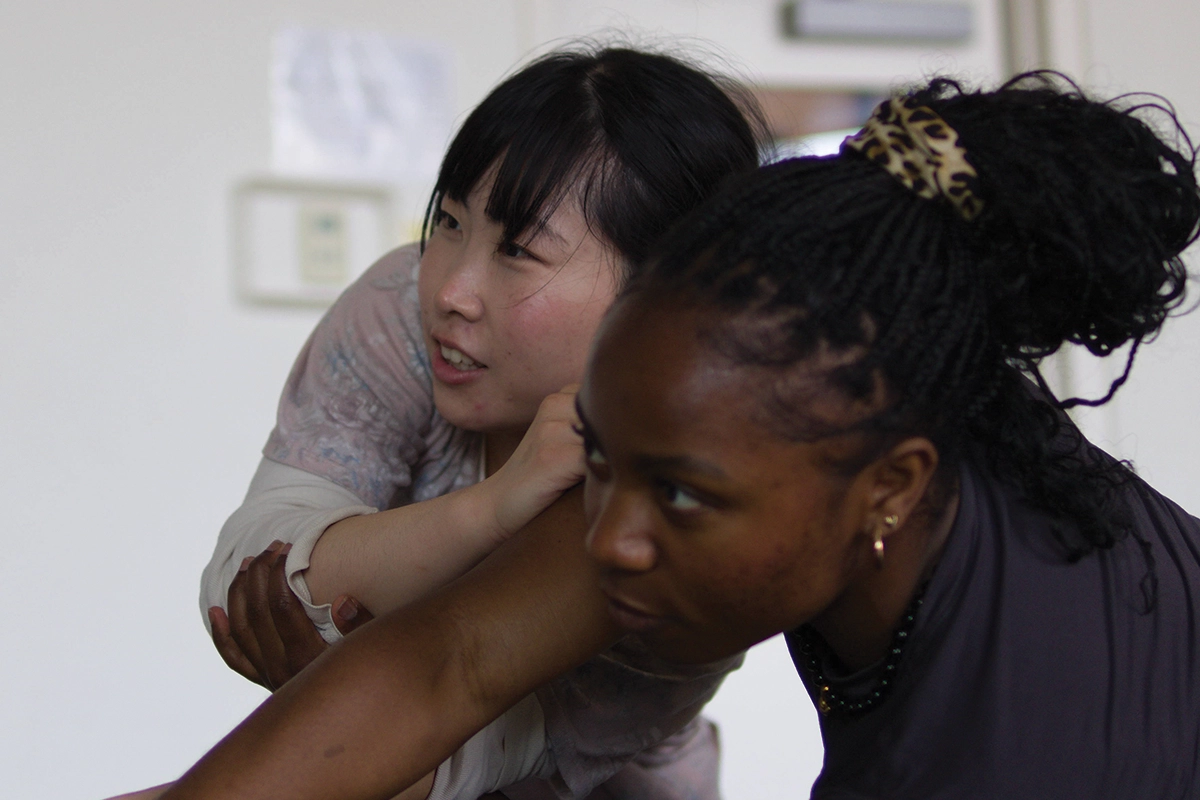
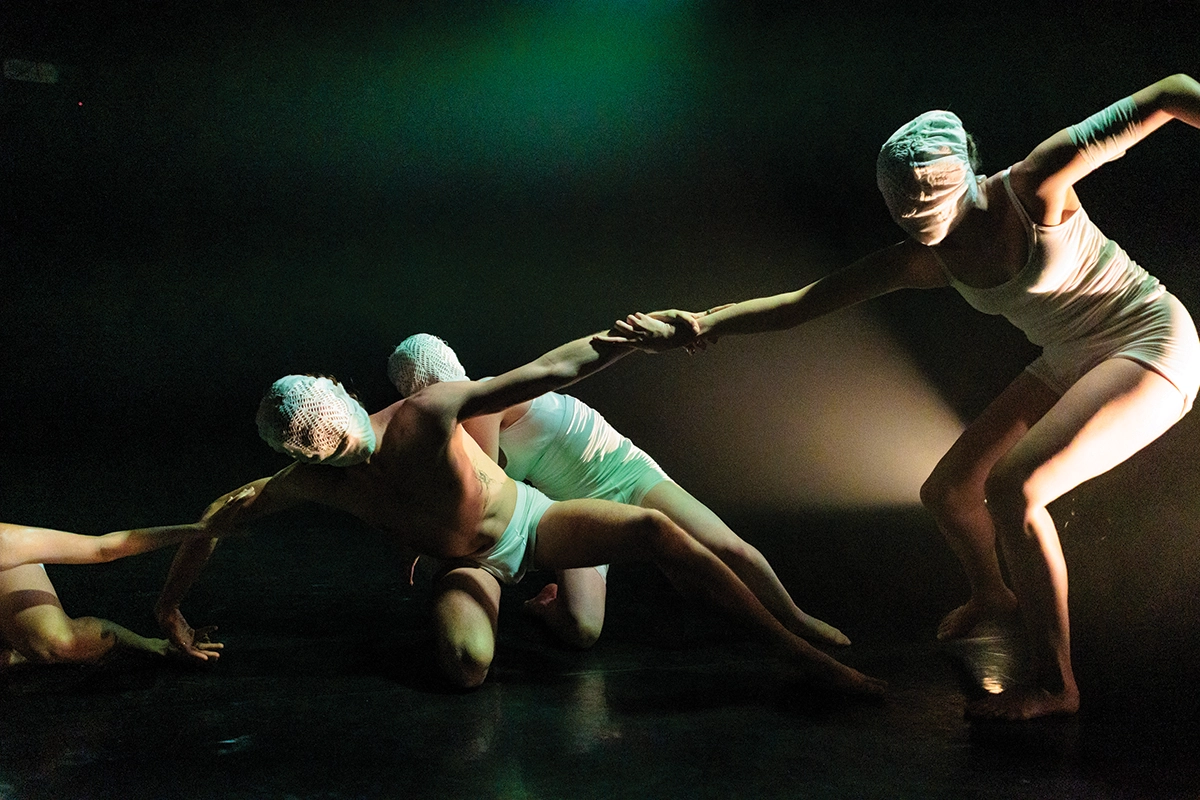
Photo: Chisato Fujii continues to redefine contemporary dance through expressive choreography that transforms movement into deeply personal and universal stories. Photos: Stepan Liubimov
The Dance Begins Where Perfection Ends
Japanese dancer and choreographer Chisato Fujii discusses artistic identity, storytelling, technique, creativity, and transformation, revealing how dance became her lifelong pursuit of emotional truth and authentic human expression.
G reat artists do more than master their craft—they reshape the way we experience the world. Chisato Fujii belongs to a new generation of dance artists whose work transcends technical excellence, inviting audiences into deeply personal landscapes of memory, transformation, and human emotion. From her early beginnings in Japan to the vibrant contemporary dance scene of New York City, she has forged an artistic path defined by discipline, curiosity, and an unwavering commitment to authentic expression.
A summa cum laude graduate of the Conservatory of Dance at SUNY Purchase College, Fujii has already established herself as an accomplished performer and an emerging choreographer whose voice is both distinctive and compelling. Having performed works by some of the most influential figures in contemporary dance while simultaneously developing an impressive body of original choreography, she demonstrates a rare ability to honor tradition while fearlessly exploring new artistic possibilities.
What makes Fujii’s work particularly captivating is its emotional honesty. Rather than relying solely on technical virtuosity, her choreography seeks to illuminate the invisible landscapes of the human experience—identity, transformation, hope, uncertainty, and the quiet resilience that shapes every life. Works such as Awakening, HELLO!, NO EXIT, and WAKE UP! reveal an artist who approaches movement as both poetry and philosophy, creating performances that linger in the imagination long after the final gesture.
Equally inspiring is Fujii’s artistic humility. Despite her remarkable achievements, she continues to speak of discovery rather than arrival, viewing every rehearsal, every performance, and every new work as another step toward understanding both herself and the limitless possibilities of dance. That openness gives her choreography an authenticity that cannot be manufactured—it is earned through dedication, vulnerability, and an enduring belief in the transformative power of art.
In this exclusive interview, Chisato Fujii reflects on the formative experiences that shaped her artistic journey, the relationship between technique and creative freedom, the evolution of her choreographic voice, and the ideas that continue to inspire her. Her thoughtful reflections reveal an artist whose greatest masterpiece may still lie ahead, making her one of the most exciting and promising voices in contemporary dance today.
You began dancing at a very young age in Japan. What are the earliest dance experiences that still influence your work today?
When I began dancing, I was terrible, I was far behind all the other kids in the studio. Even considering that I was the newest girl, I was so bad. But I remember that I totally did not care about how good I was at dancing, but having fun just moving my body. At that time, the founder of the studio was watching the class, and pulled me aside from the group and started to teach me the steps that I had never been able to do correctly. I was a 5 years old kid, didn’t know what was going on, and kind of sad about being put aside from the group. But she taught me every single step with great patience. When I finally got those steps, I realized that dancing is not just about moving the body, there is a correct way to do it, which is called technique, and it takes much longer time to learn that than I expected. This realization added a more realistic and less joyful layer to my dance journey, but even now I still see this as an important lesson. I still have so many things I cannot do in terms of techniques and expressions, and I always remind myself of that memory and keep trying.
How did moving from Japan to the United States change your understanding of dance, performance, and artistic identity?
It definitely changed me a lot. I’d say I became a totally different person. First of all, I was so overwhelmed by the environment that had so many talented and motivated dancers. I’ve never participated in any dance competitions before, and I was just taking classes with my close friends at a small local dance studio, so I had never been in that kind of environment at that time. So that was a shock for me to get to know very talented dancers who are eager to be professionals. I feel like that is funny because I thought I knew that and I was ready for that, but just thinking with my brain and experiencing it are totally different things. And the biggest thing is that I could learn how to dance in its actual meaning. Before college, I was only focused on technique, and thought all good dancers are the best technicians. It is true, but I overlooked an important aspect of dance. So I desperately tried to improve my technique, but you know, I don’t have any gift, so I felt that my peak is very close and after passing the peak, I would only lose my technique. But learning at Purchase College changed my perspective 180 degrees. My teachers and friends taught me that dance is a performance, expressive, and storytelling art. It’s not only about technique. I realized that I was just a baby who had just learned ABC. Since then, I always think about how I can express the story and how I can move audiences when I dance.
Your training includes both classical and contemporary traditions. How do you navigate the relationship between technique and creative freedom?
I think technique comes first, and creative freedom comes after technique. Which means that if a dancer has no technique, they have no choice but to explore their own creative freedom. Technique is the most basic skill in the professional dance scene, so I always follow it. Also, technique tells me how to move in a beautiful way, because that is what it was built for. I believe that I can survive in the New York dance scene because technique always gives me the truth of how to move my body. However, as I said, just following technique is not dancing. So I add my personality, which is probably creative freedom, on top of technique. I think these two are not separated, but systematically connected.
Many artists talk about finding their own voice. What has been the process of discovering your choreographic voice?
I think I am still in the process of finding my own voice. When I see beautiful art that moves me deeply, I always feel grateful to be alive. So I want to choreograph and create something that would make people feel the same way I felt. My recent works, HELLO! and hello!, in particular, are about the joy and wonder of being alive as humans. But sometimes, I feel like my choreographic voice comes from an unconscious level. I notice that I often depict scenes of dancers getting out of where they were. I assume I have a desire to escape or become something else, although I’m not entirely sure. I can only barely hear my inner voice. So I am still in the process of listening to my choreographic voice that is asleep in my mind.
From Awakening to HELLO !, your work seems deeply connected to transformation and self-discovery. How has your artistic perspective evolved across these pieces?
Awakening is my very first piece that I could feel good about. I had made a few pieces before, but I couldn’t be satisfied with them because I was trying to make dance pieces like everyone else was making, I guess. I didn’t know which direction I should aim to go. During the process of Awakening, I literally didn’t have time. I only had one or two weeks, and I had to go to Germany for a dance intensive, and the show was the day after I came back. So I only focused on creating movement rather than caring about how my piece would look. I think that worked well because I could choreograph a piece that came out of my natural choreographic voice. After Awakening, I started using images that suddenly came to my mind. It is because I was able to trust and rely on my artistic voice that naturally sits in my mind. So I draw a bunch of little humans in my journal and connect them to define the piece. The process is like decoding an ancient civilization’s language. And I gradually build it into a structure and develop it into a dance piece. So I would say that my artistic perspective is in the process of trusting my unrevealed choreographic intuition, and I try to understand it by peeling off the layers one by one, by utilizing the tools I’ve learned during college.
You’ve performed works by legendary choreographers including Merce Cunningham and Trisha Brown. What lessons from performing their work have most influenced your own choreography?
Their dance philosophies and movement languages are so beautiful and immersive. Their choreography usually doesn’t rely on a lot of drama, so I think emptiness, spaciousness, and effortless movement are at the heart of their work. In that sense, their choreography is very different from mine. But when I performed their pieces, I felt a calm and peaceful state of mind, almost like Zen. Performing and even watching their repertory is always refreshing and uplifting, and that is something I hope to achieve in my own choreography as well. I think beautiful dance works have a rich variety of dynamics and movement qualities. My natural choreographic voice tends to be intense and emotional, so I try to remind myself of what I experienced in these legendary artists’ works and apply that mindset to create more variety in my own choreography.
Works such as NO EXIT, WAKE UP !, and Candlelights all have evocative titles. Do titles come before the choreography, or do they emerge after the work begins to take shape?
I’d say it depends on the piece. NO EXIT and WAKE UP! had very clear choreographic images before I even started the process, so I remember telling my friends that the title was still up in the air, even though in my mind I already knew what it would be. But usually, I title my work after I finish the choreography, or when curators ask me for a title for the program. I prefer to choose simple, striking words that can capture the essence of the piece in just a few words. The title is the very first thing the audience sees, so I want it to spark curiosity and excitement rather than explain too much. And usually it doesn’t take much time to decide, because the titles emerge very naturally from the work itself. I just follow the sense and the words that come out of the piece.
As a Japanese artist building a career in New York’s contemporary dance scene, how do you navigate the relationship between cultural identity and artistic experimentation?
I often feel like I am neither fully Japanese nor fully a New Yorker. I do see myself as Japanese, and objectively my Japanese identity is stronger since I was born and educated in Japan. But my artistic identity is taking shape here in New York, so it feels mixed and entangled. Honestly, my identity is not something I actively think about when I create. I feel it is fluid and constantly changing over time. I also believe that my identity, which I don’t want to define too specifically here, naturally emerges through my choreography as a kind of uniqueness, without any intentional effort. When I create, I am not creating as a Japanese, a New Yorker, an immigrant, Gen Z, a woman, or any other identity label I carry, but as Chisato Fujii. My artistic experimentation is, ideally, very clear and without color, like water or at least that is the mindset I try to hold. A friend once told me that they could see certain Japanese elements in my choreography, so apparently they emerge in my work unconsciously, and that this is what makes my choreography feel very Chisato.
If one of your pieces could be experienced in a completely unexpected location—a supermarket, a subway car, or a forest—which would you choose and why?
I would set NO EXIT in a vast prairie. NO EXIT depicts a mental state and a story of trying to find a way out of an enclosed space. So I think it would be ironically interesting if I restaged the piece in a prairie, where dancers could actually leave whenever they want, yet still desperately search for an exit. That contrast might make the work feel even more real and heightened.
What’s the strangest source of inspiration that has ever found its way into your choreography?
I would say stories. Stories give me energy to live and make my everyday life feel more meaningful and fun. I believe stories are one of the most brilliant inventions humans have ever created in history. I love experiencing any kind of art that carries stories such as films, books, anime, classical literature, images, music, history, and even people themselves, because each of them holds its own story.
If you could spend one day in the studio with any artist, living or dead, who would it be, and what would you want to ask them?
Naoya Shiga. He is known in Japan as a “god of novels.” His works are characterized by pure, refined writing and narrative. The first time I read his work, I really resonated with his view on life and death. I also felt some similarities in the family relationships we each had. Since then, I have come to see him as both a kind of other half and an aspiration for me. If I could meet him, I would like to ask whether life is fun. I feel like that is the only question that really matters between us.
Imagine your current artistic journey had a soundtrack. What song would be playing during this chapter of your life?
I think my life is moving quite a lot in this chapter, even if I don’t always feel that way. I feel like I might only fully realize it when I look back right before I die, at the age of 80 or 90. So it should probably be something with rhythm, or something with unexpected developments. I’m a bit afraid to say this, but I would choose Symphony No. 9 “From the New World,” IV. Allegro con fuoco by Antonín Dvořák. My life may not be as grand as his score, but I hope it can be at least as enjoyable to me as this music is.