The Ethereal Landscapes Of Timur Lukas Blur The Line Between Memory And Reality
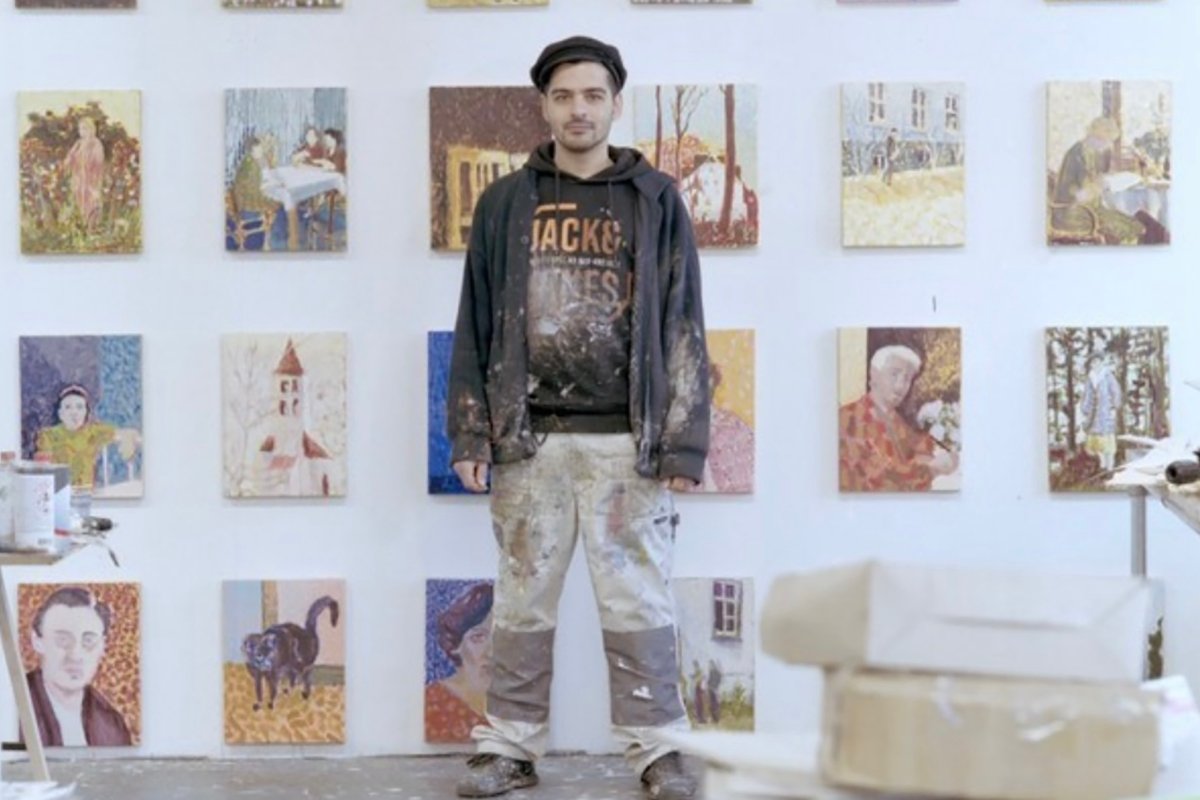
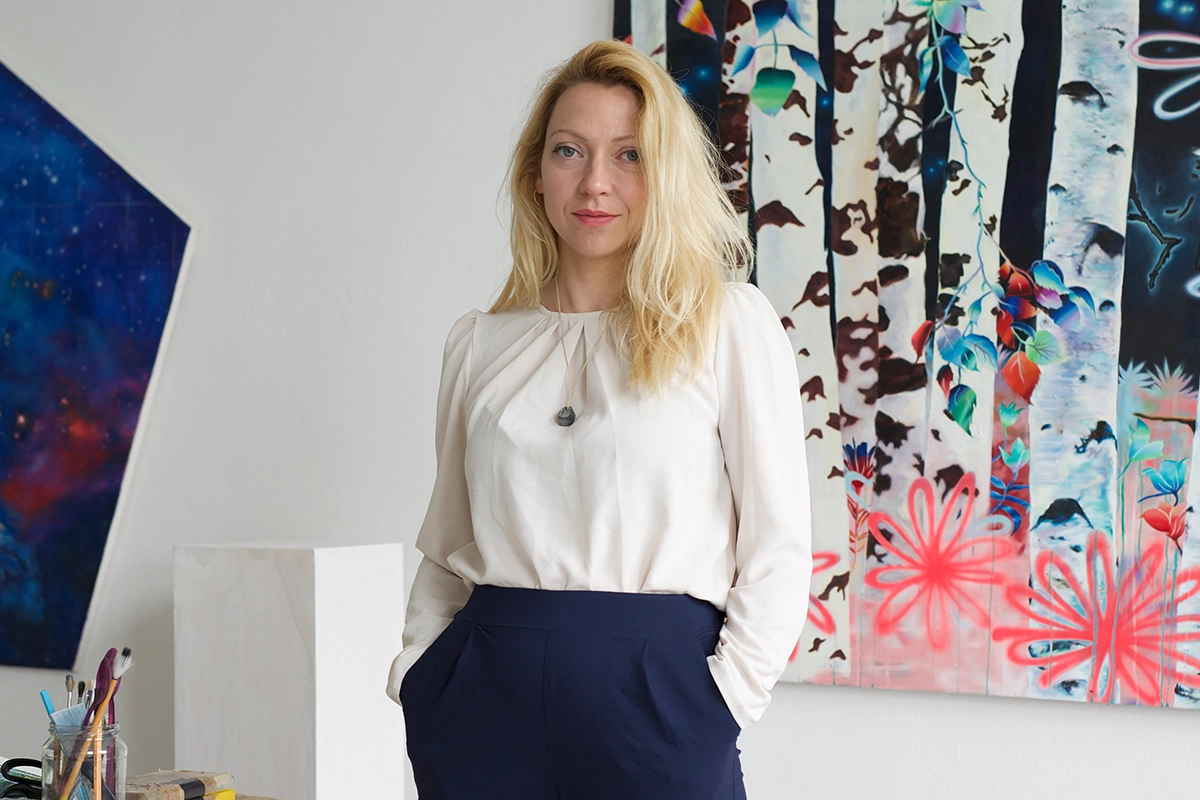
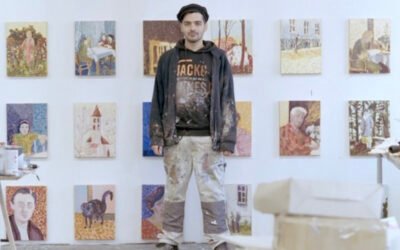
Photo: Contemporary painter Timur Lukas explores the intersection of nostalgia and imagination from his studio in Munich, Germany.
A Journey From Communication Design To Contemporary Mastery
Timur Lukas discusses his transition from design to fine arts, his training in Munich, and how personal childhood memories fuel his surreal, layered compositions that explore the shifting nature of reality.
T imur Lukas captures the ephemeral nature of the human experience and pins it to the canvas with a vibrant, surrealist precision that is impossible to ignore. In our latest feature for WOWwART, we invite you to step into the vivid, dreamlike world of a German contemporary master whose work does more than just depict scenes—it reconstructs the very feeling of remembering.
Lukas, a graduate of the Academy of Fine Arts in Munich and a former Meisterschüler under Gregor Hildebrandt, possesses a rare ability to translate the abstract weight of nostalgia into tangible, spatial distortions. His paintings act as windows into an intimate past, where childhood recollections of nature and home are filtered through a lens of bold color and layered imagery. What makes his work so arresting is the deliberate “unreliability” of his subjects; by playing with scale and fragmentation, Lukas mirrors the way our minds warp reality over time, turning simple observations into immersive, emotional landscapes.
In the following interview, Lukas opens up about his unconventional path to the fine arts—from his initial pragmatism in communication design to a transformative awakening in Bologna. He speaks candidly about the organic evolution of his technique and why he believes an artist can only truly create what they have personally lived.
We are thrilled to present this deep dive into the mind of an artist who is quickly becoming one of the most distinctive voices in the European art scene. Prepare to lose yourself in the nostalgic, blurred boundaries of Timur Lukas.
Lukas is a visionary talent whose mastery of spatial distortion and vibrant color creates an immersive, emotionally resonant viewing experience.
Interview Highlights
- The Turning Point: His transformative Erasmus semester in Bologna that led him to abandon design for fine arts.
- Academic Excellence: Achieving the prestigious Meisterschüler distinction at the Academy of Fine Arts in Munich.
- The Grandmother’s Window: How specific childhood views of nature serve as the foundation for his surrealist works.
- Emotional Scale: The use of fragmentation and “larger-than-life” objects to represent the weight of past experiences.
Could you tell us about your journey into the art world? What sparked your interest in art, and when did you decide to pursue it as a career?
When I look back on my childhood and youth today, art was always something mysterious to me, something that drew me in without me being able to fully explain why. Drawing and painting have always fascinated me, but imagining that they could become a profession was difficult for me for a long time. That’s why I initially studied communication design, it seemed like the more reasonable path in my early twenties.
During my Erasmus semester as a guest student at the Art Academy in Bologna, I realized very clearly what I had been missing. That’s where I felt that I truly belonged in the fine arts, and afterwards I decided to study at the Academy of Fine Arts in Munich.
“Art was always something mysterious to me, something that drew me in without me being able to fully explain why.”
– Timur Lucas
How would you describe your artistic style, and what influences have shaped your approach to creating art?
I find it difficult to define my own “style,” because to me it’s not something you consciously determine, but something that emerges over time through a long and intensive engagement with your own practice. Looking back, I can see certain recurring elements, especially in my technique. I’ve also realized that I can only paint or draw what I have personally experienced or felt. I’m drawn to the tension between figuration and abstraction, those moments when forms begin to dissolve and surfaces merge into one another. Artists such as Édouard Vuillard, Marsden Hartley, and Cuno Amiet continue to influence me in this ongoing development.
Memory and emotion often play a significant role in contemporary art. Is there a specific memory or experience that has had a profound impact on your work?
I can’t speak for contemporary art in general, but in my own work, memories aren’t always personal ones. For a while, I bought old family archives, photographs, on eBay and worked with the memories of others. That distance, which sometimes had something almost voyeuristic about it, was very compelling to me. What interests me is less the concrete memory of a specific moment and more the way memories feel: fragmentary, blurred, atmospheric.
I’m drawn to that in-between state where something appears familiar without being fully identifiable. Many of my motifs originate in everyday scenes or casual observations, but throughout the process they shift away from the documentary and toward something more universal, emotional. Emotion plays a role in my work as well, but in a subtle way. It isn’t necessarily conveyed through the subject matter, but through color, surface, and the way the material itself carries a mood. I’m interested in that space between closeness and distance, observation and projection, memory and the present.
What themes or ideas do you find yourself consistently exploring in your art? Why are these themes meaningful to you?
I often return to classical subjects such as portraits, still lifes, or seascapes. What fascinates me is that these motifs are universal, deeply tied to the human experience and never fully exhausted. There is always another way to look at them, to feel them, or to paint them anew. The themes I explore are rooted in everyday moments. I’m drawn to simple things that could exist in any household, and to portraits that depict people as we encounter them in daily life. I’m interested in a quiet sense of intimacy, a space that exists only between the viewer and the motif. In still lifes especially, this constellation, just the objects and the gaze, is compelling to me. Two areas of tension shape my work in particular, the dialogue between the everyday and the poetic and the shift between figuration and abstraction. It’s within these in-between spaces that the emotional core of my paintings emerges.
Can you walk us through your creative process? How do you begin a new project, and does the process evolve as you work on it?
My creative process usually begins long before a specific painting takes shape. I keep a wide collection of references, old photographs, magazine images, my own snapshots, or motifs from earlier works. From this material I develop sketches, reducing and simplifying the subject until I feel I truly understand it. It has to be simple, and it has to feel like it belongs to my visual language. Before I begin painting, I make a charcoal drawing, often built up in several layers. I fix this drawing so it becomes a foundation that can later be covered, altered, or partially revealed through the paint. Once I start working with color, chance becomes an essential part of the process. I begin by setting a few tones to establish the atmosphere and temperature of the painting, and from there I make decisions intuitively. Mistakes, revisions, and unexpected developments Interview are important, new ideas often emerge from them. That’s why the finished work never fully corresponds to the initial idea.
Do you use any unconventional techniques or materials in your work? If so, how do these elements contribute to your overall artistic vision?
Painting is always a form of alchemy for me. A significant part of my process involves making my own paints. It gives me full control over the consistency, body, drying time and most importantly, the color itself. I need this physical, direct relationship with the material, because it carries my brushstroke and preserves the trace of my hand. Since oil-soaked rags can self-ignite, I store them in a fire-safety container in my studio. A few years ago, I began reusing them. I mount the rags onto wooden panels with rabbit-skin glue, creating structures that resemble Rorschach tests. Chance determines which rag ends up where, guided perhaps by my own aesthetic instinct in that moment. This initial structure provides a kind of obstacle or resistance to work against; it gives the image a first direction and a distinct character. As I continue, the process becomes a dialogue between chance and control. The stains, folds, or textures of the rags can flatter the motif or disrupt it entirely. I respond to them, integrating, transforming, or painting over them. Again and again, I try to push against my own control.
Collaboration can be an important aspect of an artist’s career. Have you collaborated with other artists or creatives, and how has that influenced your work?
I share my studio with Laurentius Sauer, a friend and artist with whom I already collaborated during our studies. We explore similar themes, and it’s enriching for me to see how he finds his own solutions. In our joint drawings, he often takes steps I wouldn’t take myself, yet they make complete sense within the work. These additions, two different approaches that nonetheless align are a central part of what makes our collaboration interesting. There’s surprisingly little friction; instead, there’s a quiet, productive trust. Our collaboration began during the pandemic with our edition “DueTwo.” We each drew separately, combined the drawings digitally, and printed them as screenprints that we hand-colored alternately. This process created a shared visual language thatdiffers clearly from our individual works: more colorful, more playful, and composed differently. We continue this edition till today and it has been exhibited at venues such as the MEWO Kunsthalle in Memmingen and the Kunstverein Konstanz. Two collaborative folding screens have also emerged from this process. Today, collaboration matters to me primarily through the exchange it creates. Our dialogue influences both of our practices in a positive way.
In today’s digital age, how do you view the impact of technology and social media on the art world? How has it influenced your own practice or ability to connect with audiences?
I see social media as an important tool. It’s free, it has enormous reach, and I enjoy using it—also because it has undeniably influenced my career. Through social media I’ve connected with artists and art-world figures I would never have met due to geographic distance. At the same time, I try to keep a certain distance from it, because it’s difficult for me to spend only a small amount of time on the platform. Despite all its benefits, nothing can replace experiencing a work in person or meeting someone in real life.
In my own practice, the handmade element is essential. I’m not perfect, so my work can’t be perfect either—and I resist that idea. Imperfections, materiality, surfaces that change or wear down belong to the real world for me. Perhaps it’s a kind of counterpoint to digital perfection, though I’m not trying to make anything explicit; it’s simply that transience and physicality are part of my artistic language.
I view new technologies as additional tools. I don’t currently use AI in my practice, but I wouldn’t rule it out if it offered something genuinely useful. Still, I believe the process needs to remain physical for me. Technology can influence painting, but it doesn’t replace it.
How do you see the relationship between your art and your audience? What do you hope people take away from your work?
For me, art is always a dialogue, even if it doesn’t always happen immediately or directly. I enjoy when a painting leaves a question or a certain feeling in my mind, much like it does when I’m working. If the viewer finds joy in the piece and can link it to their own memories or perceptions, that’s the ideal outcome for me. I want the viewer to engage with the work, but I also understand that not every piece will resonate with every person. My works should be an invitation to contemplation and stillness, an invitation to reflect on one’s own perception. Interpretation remains open, and this is of great importance to me. I don’t aim for a fixed reading of my works, but rather value the different perspectives they can evoke. It’s not crucial that the audience shares my thoughts or fully understands my work. The thoughts of the viewer are just as valuable as those that went into the creation of my paintings. The fact that these thoughts can differ is, for me, a sign of the complexity and openness of art.
Looking ahead, what projects or ideas are you excited to explore in the coming years? Are there any particular goals you hope to achieve as an artist?
I see the next few years as an opportunity to embrace this uncertainty and give my work new impulses. It’s the journey and the potential for growth that excites me and the vast range of possibilities still ahead.
Editor’s Note
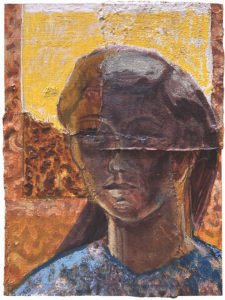
Timur Lukas delivers a masterclass in psychological depth with this striking portrait, where the physical medium becomes a metaphor for the fragmentation of memory. The bold use of ochre and sun-drenched yellow creates a nostalgic warmth, yet the deliberate layering and torn textures suggest a history being rewritten. By obscuring the subject’s gaze through physical distortion, Lukas invites viewers into a surreal space where identity is fluid. It is a hauntingly beautiful exploration of how the past remains both present and partially lost.