Alexander Lis Mastering the Art of Structure and Movement
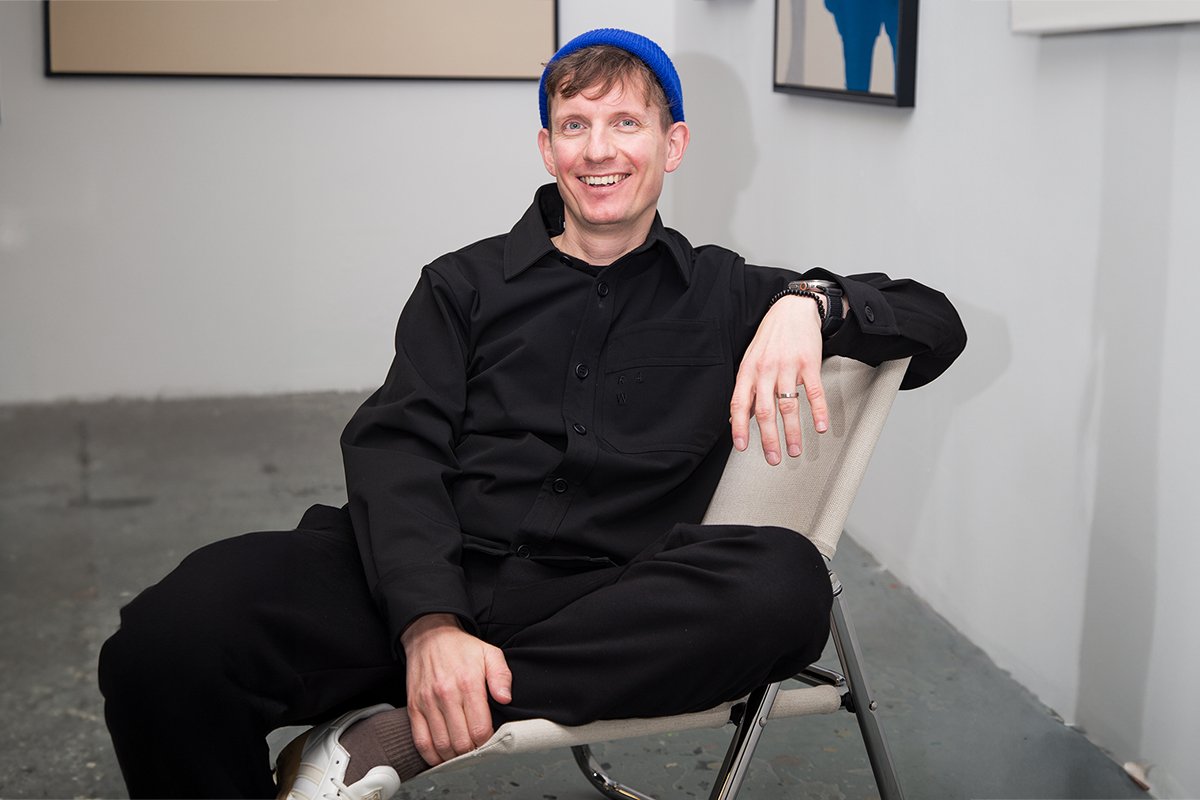
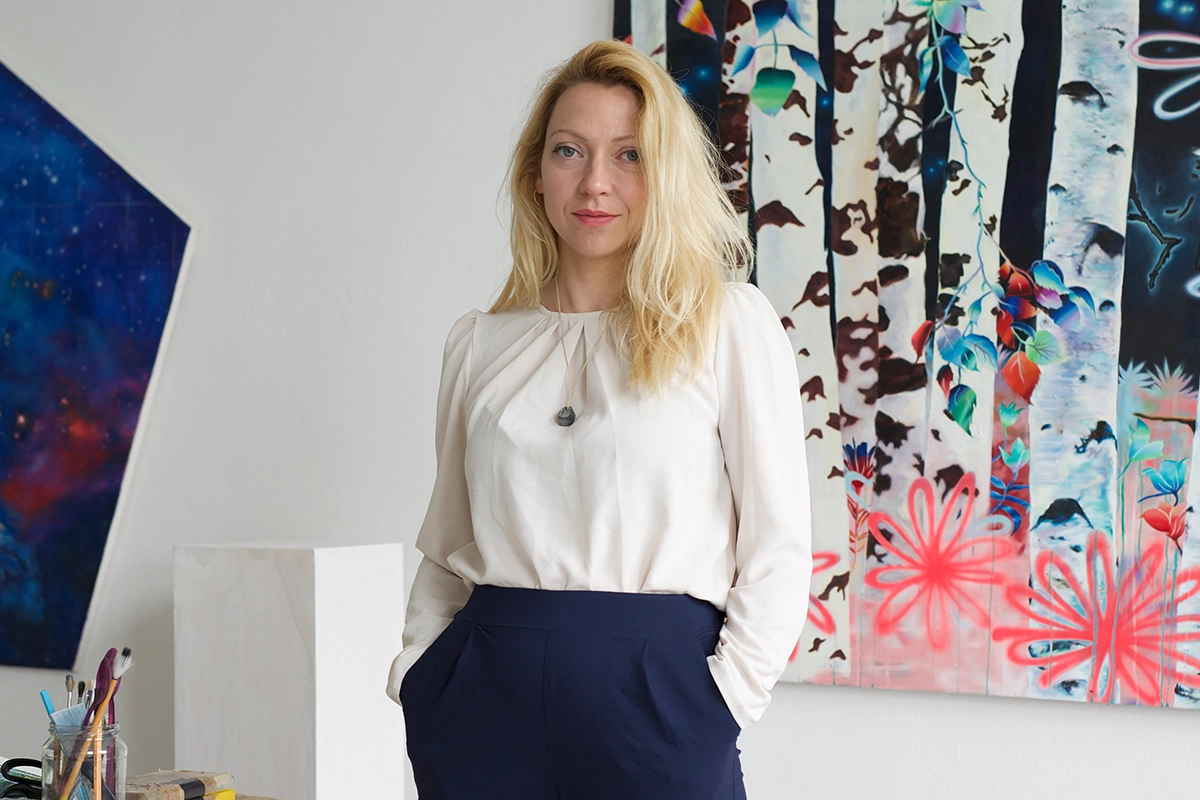
Alexander Lis in his Frankfurt studio, surrounded by vibrant canvases that reflect his unique blend of urban and natural inspirations.
Exploring Intersections of Urban Influence and Natural Patterns in Contemporary Art
Alexander Lis discusses his artistic evolution, balancing chaos and structure, collaborative projects, and the significance of color and rhythm in his work.
A lexander Lis is an artist whose work transcends boundaries, inviting viewers into a vibrant dialogue between structure and movement. Based in Frankfurt am Main, Lis draws upon his rich background in graffiti and visual communication to create layered compositions that resonate with atmospheric depth and dynamic shifts. His artistic journey is marked by a profound exploration of color, rhythm, and transparency, showcasing a unique ability to capture the essence of both natural patterns and urban influences.
Lis’s evolution from graffiti to minimalist composition exemplifies the delicate balance between chaos and control. Through his innovative process, he transforms intuition into a meticulously edited visual language, imbuing his works with a sense of harmony grounded in motion. This approach not only reflects his experiences in various cities but also highlights his commitment to collaboration and dialogue in the artistic community. As he discusses his initiatives and teaching practices, it becomes evident that his focus on exchange and shared experiences fuels his creativity, allowing him to continuously redefine his artistic identity.
“The urban remains present: the experience of painting outdoors, working fast and large, responding to space.” – Alexander Lis
In the pages that follow, the interview delves into the significance of Lis’s work, his thoughts on printmaking, and the thematic explorations that guide his exhibitions. With over 25 years of experience and numerous accolades under his belt, Lis remains driven by an insatiable curiosity and a desire for growth. His future endeavors are set to further expand the boundaries of his practice, incorporating textiles and collaborative ventures that promise to engage and inspire.
This issue of WOWwART magazine proudly presents an in-depth engagement with Alexander Lis’s remarkable journey, inviting you to witness the interplay of structure and movement that characterizes his extraordinary body of work.
“eoc acts as a reminder to stay close to fundamentals — line, interval, surface — while keeping sensitivity alive.” – Alexander Lis
Your career began with graffiti and urban art, and has since evolved into minimalist compositions. How has this transition shaped your identity as an artist?
The visual language began more than twenty years ago within graffiti — movement, rhythm, and scale. Design studies in Darmstadt, Berlin, London, and Austria added structure and reduction. The urban remains present: the experience of painting outdoors, working fast and large, responding to space. The studio expands this into another field — dyeing fabrics, stitching canvases, building modular surfaces, testing materials. Identity forms where street energy meets studio precision.
Your work bridges chaos and structure. What inspires this balance, and how do you approach achieving it?
Intuition builds the first layers; editing shapes the rest. Harmony needs motion — pure stillness becomes static. Rhythm, interruption, and calm coexist. Nature replaces architecture as reference: satellite views of coastlines, slow shifts of land and light, traces left by human influence. These structures become lines, densities, and fields on canvas.
The name “eoc” (element of colors) is central to your identity. What does it mean for your process?
“Element” stands for essence; “colors” for emotion in movement. eoc acts as a reminder to stay close to fundamentals — line, interval, surface — while keeping sensitivity alive. Color carries atmosphere and balance; it often speaks before language begins. The name is less a title than a compass.
You’ve led collaborative initiatives such as After School Club and fourfiveX. How did they shape your practice?
Collaboration builds frameworks where exchange can happen. Those projects turned creation into dialogue rather than control. Hosting processes, inviting others in — this openness continues in the studio. Materials, space, and people remain part of the same conversation.
Your teaching spans international institutions. How has this influenced your perspective on art?
Teaching mirrors making. Articulating decisions reveals what truly matters: attention, rhythm, clarity. Working in cross-disciplinary settings develops a shared language of tempo and contrast, beyond tools or technique. Learning and teaching merge; both keep the practice awake.
What role does printmaking play, especially in shows like “Positions of Print”? How do traditional techniques coexist with the urban aesthetics of your work?
Printmaking introduces time and resistance. Screens, plates, or monotypes slow the process, creating moments to choose — repeat, shift, misalign. Traces and overlays echo the urban layerings from earlier work. Each print becomes a compressed form of movement, a reduced version of a larger gesture.
With more than 25 years of experience and awards such as the German Design Award and ADC Gold New York, what remains your driving motivation?
Curiosity remains the engine. Development counts more than repetition. Every phase invites new experiments, while a clear handwriting stays visible. Recognition supports the path but does not define it. Progress comes from testing limits — shifting scale, material, and technique to find new forms of rhythm and reduction. The motion itself keeps the work alive.
How do Frankfurt and your travels influence your creative output?
Cities define tempo. Frankfurt offers clarity and openness; other places bring density, silence, or distance. These rhythms translate into proportion and edge rather than depiction. Travel expands methods and networks — each region adds another tone to the palette.
Recent exhibitions such as “Muralarum” and “Extended Abstraction” highlight different aspects of your work. How do you develop themes for exhibitions?
Every exhibition begins with a direction — a shared premise that guides new works. Series develop through both position and intuition: exploring composition, texture, and materiality that connect the pieces. Titles act as anchors without closing interpretation. Installation and sequence extend the composition into space.
Looking ahead, what future mediums, collaborations, or themes will you explore?
Focus moves further into textiles — dyeing, cutting, stitching, composing with seams. Rug-making becomes painting for the floor. Large-scale wall works return with warmer seasons, alongside collaborations with architecture, sound, and movement. The essence remains constant: lines / layers / order and drift — spaces that breathe.
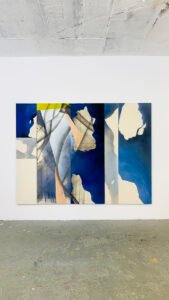
beneath the surface — 200 × 150 cm, unframed (3 parts), 2025 — acrylic on canvas
drawn formations
Editor’s Note
“Beneath the Surface,” measuring 200 × 150 cm and composed of unframed parts, encapsulates a vibrant dialogue between color and form using acrylic on canvas. The interplay of abstract drawn formations creates a dynamic visual experience, blending organic shapes with structured elements. This piece invites viewers into an immersive exploration of the tension between chaos and order, evoking both introspection and energy.