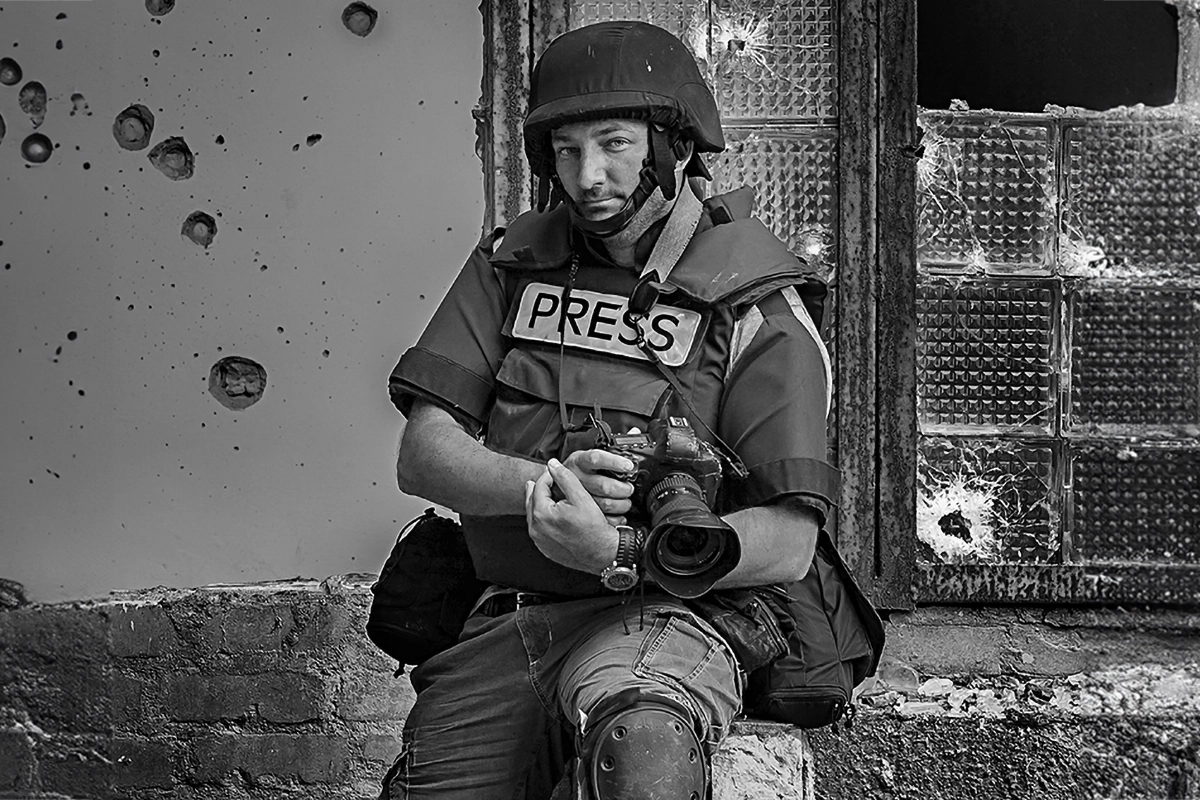
Award-winning photographer Dimitri “Dima” Bell, capturing the essence of humanity one frame at a time—where history and artistry converge.
The Art Of Telling Stories In A Single Frame
Dimitri “Dima” Bell shares insights on his transformative photography journey spanning warzones, portraits, and history, while exploring resilience, neutrality, and the evolving role of photojournalism in modern media.
D imitri “Dima” Bell is nothing short of a virtuoso behind the lens, his work a masterclass in storytelling through visuals. With a career spanning nearly thirty years and countless countries, Dima’s journey has been one of extraordinary depth, versatility, and impact. From capturing the unflinching realities of conflict zones to illuminating the intimate moments of weddings and portraits, there’s a profound humanity in every image he creates. His photographs are more than static frames—they pulse with emotion, context, and significance, reflecting his sharp eye, relentless curiosity, and unmatched ability to distill complexity into art.
Dima’s evolution from a decorated photojournalist chronicling world-shaping events to a preeminent commercial and portrait photographer is a testament to both his resilience and his artistic range. Whether navigating the harrowing frontlines of Chechnya or Syria or highlighting the joyous milestones of his clients’ lives in New England, his work carries an unwavering commitment to truth, empathy, and excellence. It’s no surprise his talents have been recognized on a global scale, with prestigious accolades and exhibitions showcasing his brilliance.
What makes Dima’s photography so compelling is not only his technical mastery but also his ability to make the unseen seen—the quiet resilience of survivors, the dignity within chaos, the strength found in vulnerability. His images don’t just document; they immerse, educate, and inspire. It is this extraordinary ability to connect people to the heart of a story that elevates him as both an artist and a witness to the human condition.
For WOWwART readers, it is a privilege to share this conversation with an artist who has spent his life capturing the moments that matter most. Dima Bell’s work reminds us of the transformative power of photography—and of visual art writ large—to unveil the layers of our shared humanity and, ultimately, to move us toward greater understanding. Prepare to step into the world of an artist who not only sees but truly feels the stories waiting to be told.
Dima Bell transforms events into indelible art, blending technical mastery and profound storytelling that evokes empathy and deep reflection.
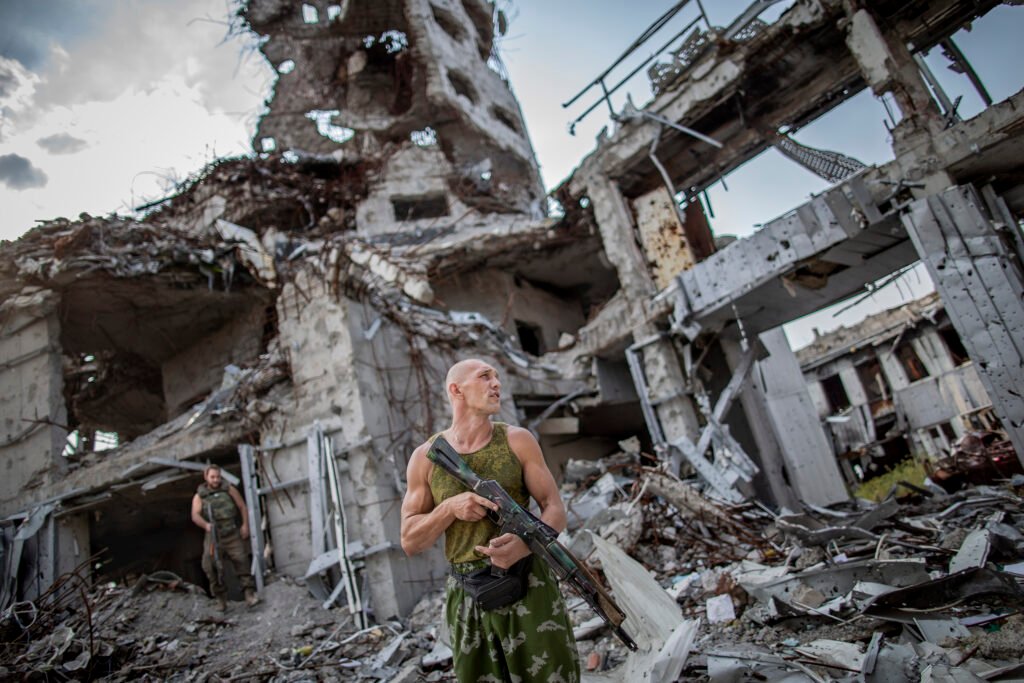
Patrol of territory of former Donetsk airport by soldiers of Moscow-backed brigade ÇVostokÈ, Donetsk, DPR(Donetsk People Republic), September 4, 2015
How did your journey as a photojournalist begin, and what initially drew you to capturing images of conflict and war?
I became a photojournalist almost by accident — it was never part of any plan. After university I interned at the Moscow bureau of Express Newspapers (UK), where I met a freelance photographer who, in a sense, “infected” me with a love for the photography. I did not take it seriously at first; there were false starts and plenty of mistakes. However, my home country offered more than enough opportunities for war correspondents to practice their uneasy trade — it was a time of harsh realities but also of real journalistic opportunity. Eventually I came onto the radar of The Sunday Times (UK), which became my professional school and, in many ways, the family that shaped me for several decades. With time, my work brought me into contact with many of the leading European and American media outlets.
“Your job is to witness, not to belong.”
During the Chechen Wars, you famously maintained neutrality while documenting both sides. How did you approach this delicate balance, and what challenges did you face as a result?
Working with regular army units or with militias and rebel formations along active front lines can be fascinating, dangerous, and sometimes simply impossible. Success depends on the access granted by commanders, the trust you earn from soldiers, and the discipline of the unit you are attached to. Access can be invaluable — but it can also become a trap.
“A single image distills a complex event into one honest moment.”
In the Chechen campaigns, the Russian side offered little more than a clumsy MOD press-service system: censorship, obstruction, and almost no real opportunities. On the insurgent side — among Islamist fighters and militia ranks — the danger was different: I could be taken for ransom or killed if anyone suspected I was a Russian agent.
“A dead journalist helps no one; a live one can report again tomorrow.”
Access often tempts journalists to trade independence for proximity. You must resist that. Your job is to witness, not to belong. Whether embedded with a regular unit or moving alongside volatile militias, the rules are the same: verify everything, keep relationships strictly professional, never treat access as a reward for loyalty, and calculate risk before you move.
Above all, be meticulous. Work so clearly and thoroughly that no one can accuse you of distortion. Your reporting may be critical, but it must never be false. Double-check every detail — geography, names and ranks, place names, weapon types and calibers, tactics — every element of the story.
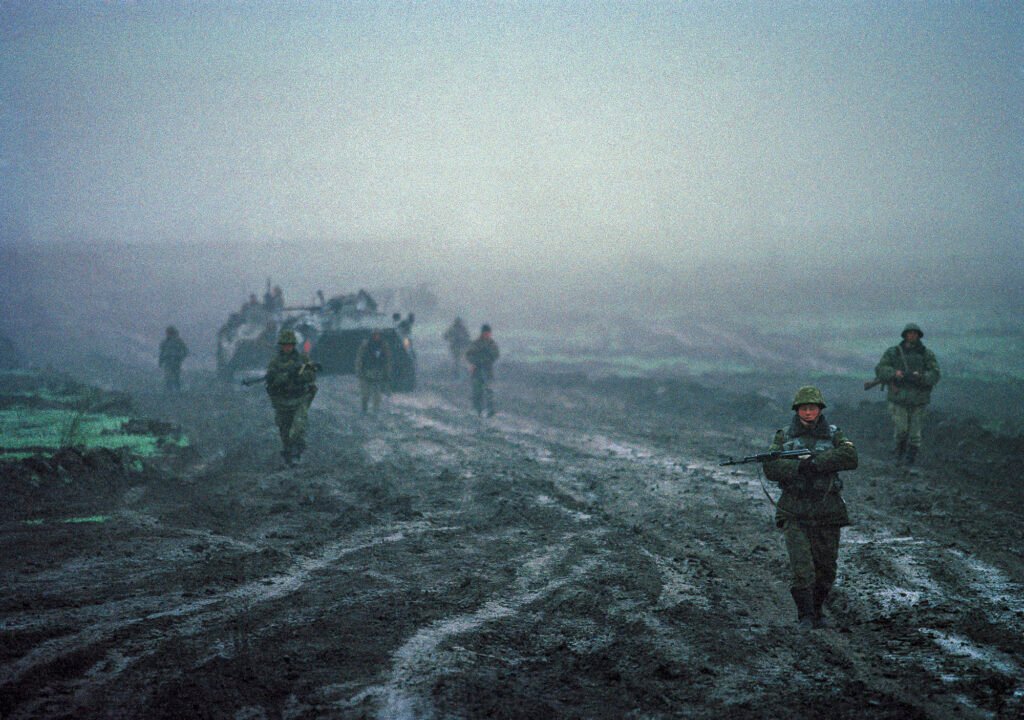
Russian army convoy on a Chechen road, April 2002, Chechnya, Russian Federation. Photographer: Dmitry Beliakov
Some of your photographs, like those from the Beslan school siege or the Donbas conflict, have become iconic. What do you think makes a single image so powerful in telling a story?
A single image is powerful when it distills a complex event into one honest moment — something people understand instantly and remember. A real photograph also needs a certain unspoken “zest” that makes the viewer stop and look. One of my teachers said photography is the reverse of cinema: in film the picture moves and the audience sits still; in photography the image is still, so the challenge is to stop the audience. If a frame does that, it becomes iconic.
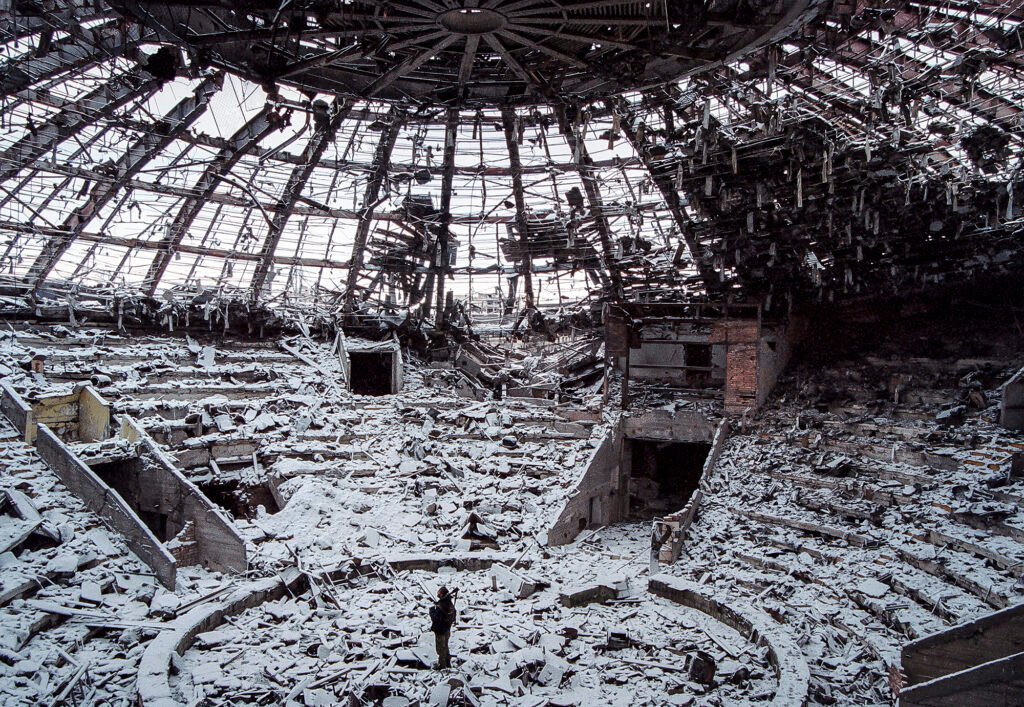
Foto shows: Russian soldier observes ruins of circus. February 2000, Grozny, Chechnya, Russian Federation.Foto by: Dmitry Beliakov
Working in high-conflict zones like Syria and Ukraine is extremely dangerous. How do you personally evaluate the risks involved, and what guides your decisions on how far to go for a photograph?
A dead journalist helps no one; a live one can report again tomorrow. As fine BBC correspondent Lyse Doucet often reminds us, there are stories worth taking risks for, but no story is worth dying for. I have taken my share of uncalculated risks – coming under mortar fire, driving under tank shelling, facing threats of being shot or even beheaded, or being thrown into a zindan — an underground detention hole.
Often the danger came simply because my presence irritated someone with a weapon. Sometimes the issue was nothing more than the fact that I carried a Russian passport.
Entering a conflict zone without reflection is like walking into a storm blindfolded. Responsible reporting begins long before the frontline — with a discipline of constant self-questioning.
Ask yourself: Why go to this place? What route will you take? Through which settlements? Who is manning the checkpoints, and from which battalion? Has your driver taken this road recently? How long will the trip take, what will it cost, and is the risk justified if the outcome is uncertain?
And one rule is absolute: never get into conflicts at checkpoints. Do not photograph without explicit permission. Too many journalists have died because someone decided they “looked suspicious,” or because espionage was a convenient pretext. That often happens in war. No one trusts anyone. After all, it is war…
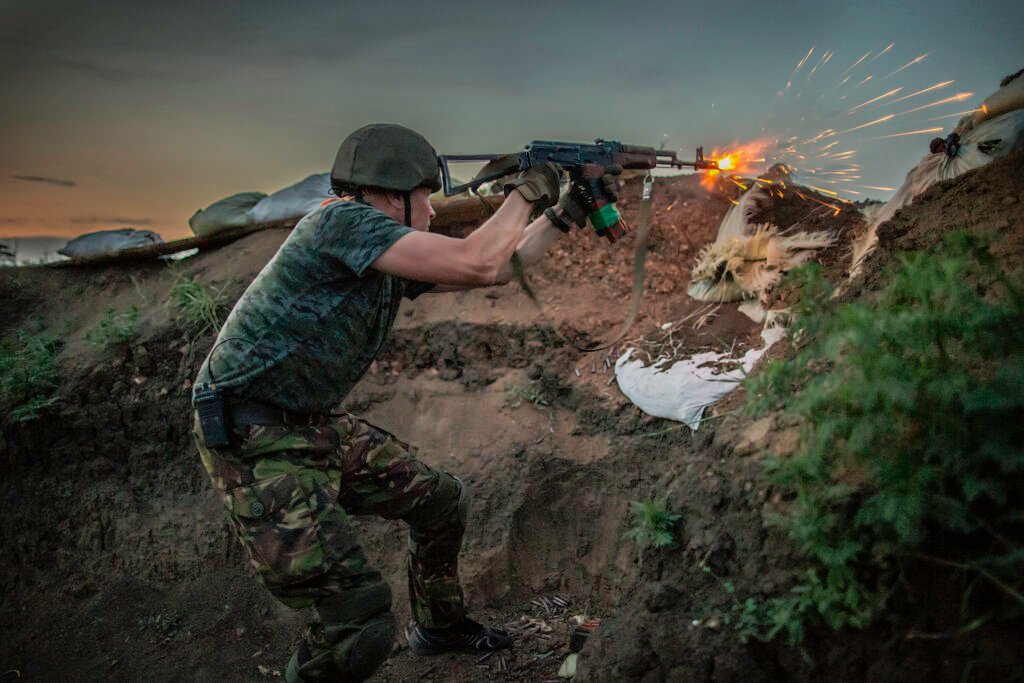
Trench War: Ukrainian Soldier engaged in battle with separatists, Shirokino, Volnovakhsky district, Donetsk region, Ukraine, 24 June 2015
Your projects covering Stalin’s mass exiles and survivors of forced migrations have been deeply impactful. What inspired you to take on this historical subject, and what have you learned from the survivors you interviewed?
I spent two years working on the Ordeal project, driven by a clear understanding that this was the last opportunity to meet and speak with the remaining survivors of one of the largest forced deportations of the 20th century — the expulsion of the Chechen and Ingush peoples. Some of those I interviewed were over a hundred years old; the oldest man I met was 115. He had lived through World War I, the Bolshevik Revolution, collectivization, Stalin’s purges, World War II, the deportation, and both Russian–Chechen wars.
The strongest lesson from the many hours I spent listening to these people is this: despite loss, pain, and humiliation, one must learn how to forgive — but never forget.
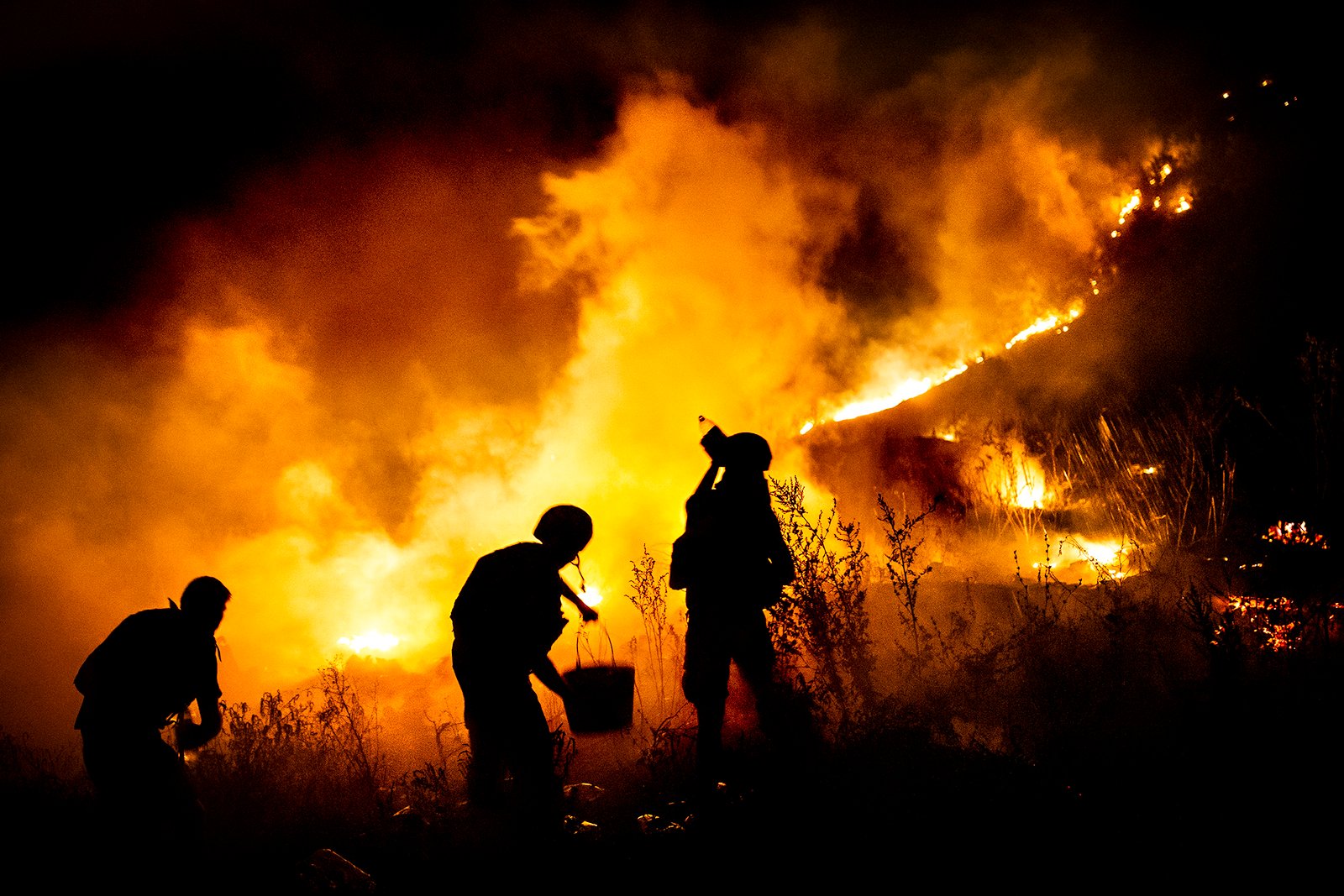
Soldiers of the 46th battalion of the army of Ukraine try to extinguish fire due to mortar shelling by separatists, Mariinka, Donetsk region, Ukraine, August 23, 2016
After opposing the 2022 Russian invasion of Ukraine, you left Russia to resettle in Vermont. How has this move impacted your work as a photojournalist, and how do you see this chapter of your life unfolding?
Indeed, after openly opposing the invasion of Ukraine, I relocated to Vermont, where I was honored with a Fellowship at Norwich University in 2022. In February 2023, the John and Mary Frances Patton Peace and War Center at Norwich invited me to exhibit my work from Donbas in a show titled “On the Margins of Europe: A War Before the War.” The exhibition included a panel discussion attended by representatives from CNN and Human Rights Watch. It later became a traveling show and, a year later, was displayed at Saint Michael’s College of Vermont.
Alongside my photographic work, I lecture at local universities and community centers about my experience as a war photographer and my perspective on the conflict in Ukraine. I also teach a course at a local university focusing on balanced, fact-driven journalism in conflict environments.
At the same time, I continue to take journalistic assignments whenever possible. One of the stories I covered for AP Photo was a series on the massive floods in Vermont and their impact on local communities.
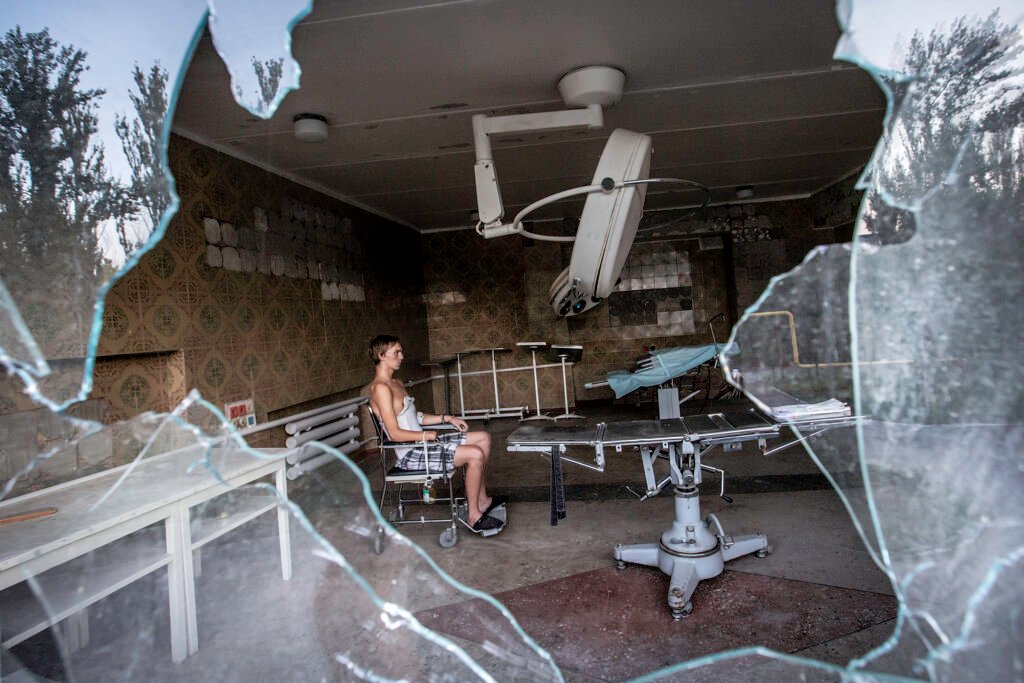
Victim of a booby-trap seen in operation block of hospital № 21, located dangerously close to the frontline, Donetsk, DPR(Donetsk People Republic), August 31, 2015 17. A miners brigade seen in mine «Progress-2», Torez, DPR, (Donetsk People Republic), October 24, 2015
What do you see as the role of war photography in today’s media landscape, and how has new technology (like social media) changed the field compared to when you started?
War photography remains essential in today’s media landscape because it provides direct, unfiltered evidence of what is happening on the ground, beyond rhetoric or propaganda. In an age of disinformation and digital manipulation, authentic images help anchor public understanding in verifiable reality. They remind audiences that behind every headline are human lives, consequences, and responsibility.
When I started in the 1990s, social media simply didn’t exist, and information moved far more slowly. Today it moves instantly — and uncontrollably. Social platforms can surface extraordinary eyewitness material, but they also flood every conflict with noise, disinformation, and deliberate manipulation. In modern war reporting, your job is to use these tools without being used by them: verify everything, organise the chaos, and always ask whether sharing something helps the audience understand, or merely fuels confusion and anger.
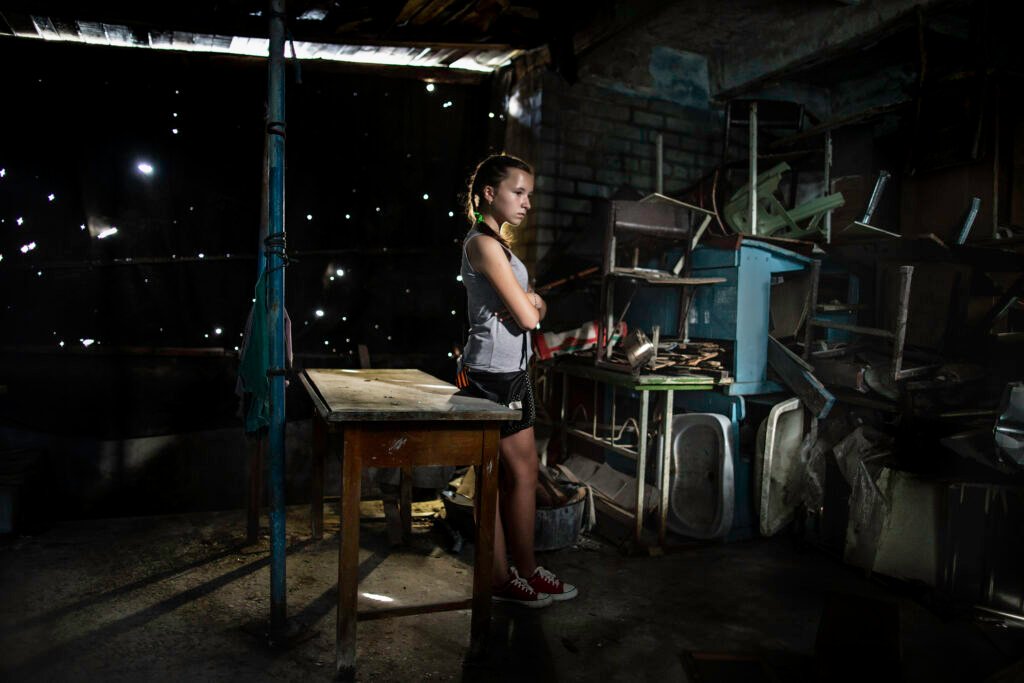
Student Katya Khomich, 13, seen in lumber room of secondary school № 4, where her father collected furniture that survived the devastating battle for Debaltseve and its suburb, Vuglegorsk, Donetsk region, DPR (Donetsk People Republic), 6 September 2015
Your work often shines a light on the human cost of war. What do you hope people take away from your photos, especially about the resilience of individuals in the face of such hardship?
I never think of my photographs as messages; they are simply encounters with people living through moments most of us can barely imagine. If viewers take anything away, I hope it is an understanding that war is not an abstraction — it is lived by individuals with names, families, fears, and astonishing reserves of strength.
The resilience you see in my images is not something I create; it already exists in them. My role is only to witness it – honestly. And if a photograph allows someone, even for a second, to feel empathy rather than indifference, then it has done its job.
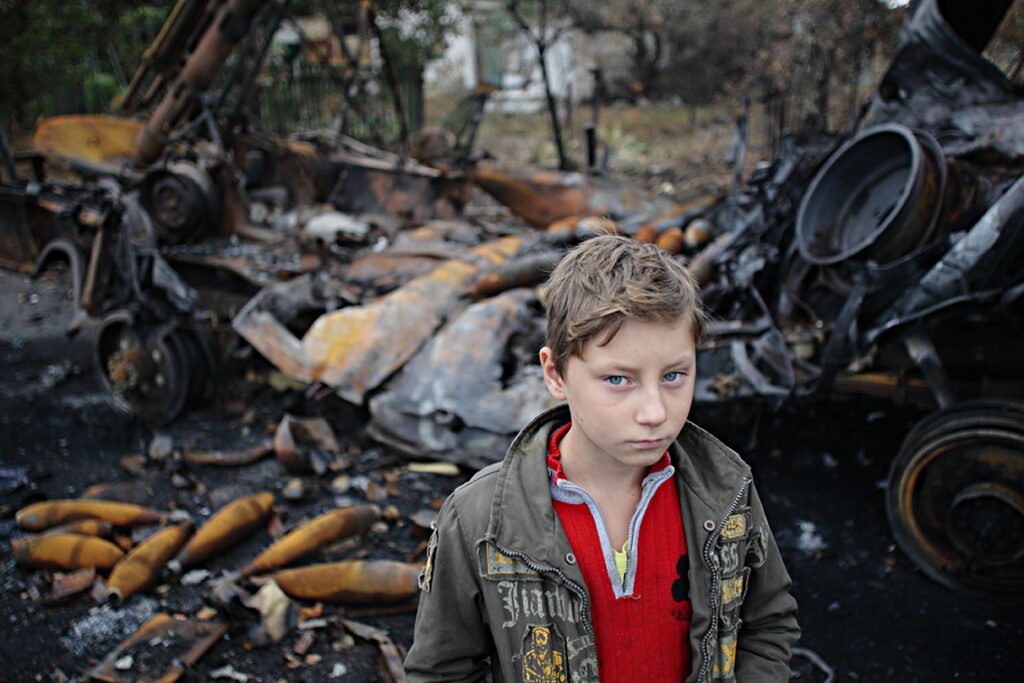
Artyom Bychkov, 10 seen beside the destroyed Ukrainian army truck, on Komsomolskaya street, 50 feet from his house. Novoekaterinovka is one of Ukrainian villages, which took the heaviset toll in terms of destruction, Novoekaterinovka, Eastern Ukraine, September 09 2014
Which artists, photographers, or events have most influenced your work and artistic perspective? Are there any particular collaborations that left a lasting impact on you?
Several photographers have profoundly shaped my understanding of the craft. My icons are Jan Grarup, James Nachtwey, Tom Stoddart, and Don McCullin. I had the privilege of meeting James Nachtwey twice, and we spoke at length about the work. I also knew the late Tom Stoddart, who generously offered advice and helped with contacts and introductions. I never tried to imitate their style, but I held on to their small suggestions and experimented throughout my career — sometimes it worked, sometimes it didn’t, but it always moved me forward.
A friend and colleague who influenced me both professionally and personally was Sunday Times reporter Mark Franchetti, with whom I worked closely starting in 1997 and with whom I remain in contact to this day.
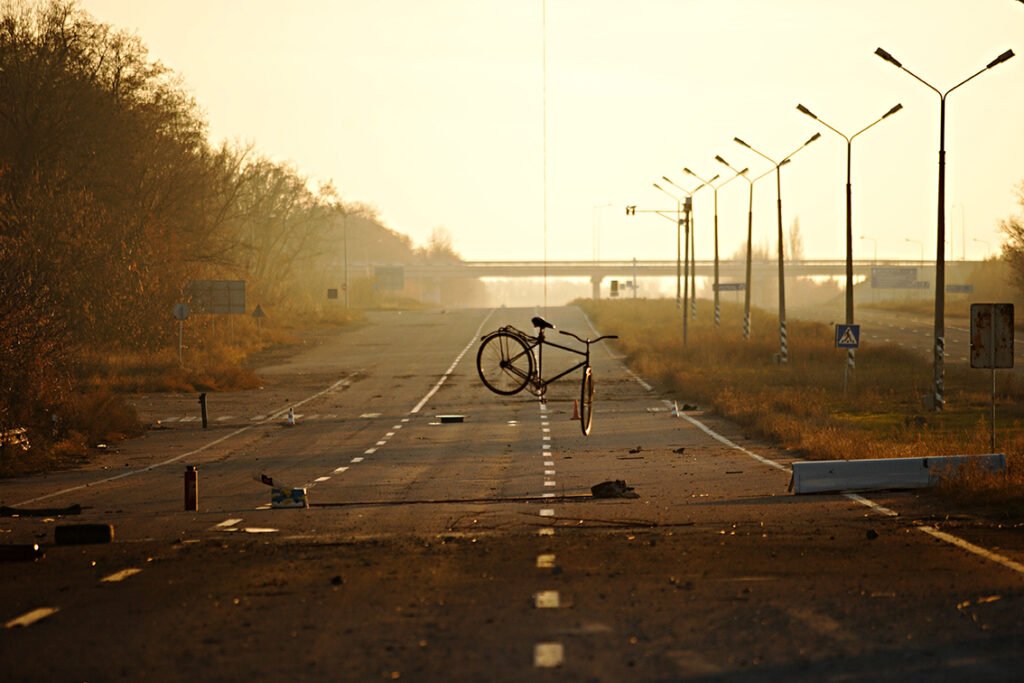
Bicycle hanging on string under bridge on highway leading to airport of Donetsk, where heavy fighting is going on between Ukrainians and Moscow-backed separatists. Bicycle serves as an improvised Passing closed! Èsign, Donetsk, DPR, (Donetsk People Republic), November 9, 2014
You’ve worked extensively across various war zones and cultural projects. What’s next for you as an artist and journalist? Do you foresee yourself continuing to focus on conflicts, or are you exploring new themes and subjects in your work?
Today I am focused on commercial photography, delivering high-end imagery for corporate events, portraits, and weddings across the Northeast. Alongside event work, I offer professional portrait sessions both in-studio and on location, providing clients with a guided and seamless experience.
Photojournalism is still possible, but without sponsorship or grant support it is extremely difficult to sustain. If resources allowed, I would pursue a long-form multimedia project on the lives of developmentally disabled people in the United States and on how upcoming shifts in healthcare and education policy are already affecting some of the most vulnerable communities.
That is a subject I would return to immediately if given the opportunity.